14 Days in Yunnan: China’s Most Beautiful Province
If I had to pick just one province in China that completely blew me away with its natural beauty, it would hands down be Yunnan. This southern province has everything: snow-capped Tibetan mountains, rushing rivers carving dramatic gorges, pristine lakes reflecting ancient pagodas, lush tropical rainforests, and some of the best tea in the entire world. Honestly, Yunnan might be the most diverse and beautiful place we explored during our three years living in China.
After spending six weeks traveling through Yunnan during the summer, we fell absolutely head over heels for this province. The outdoor adventures are endless, the food is incredible, and the cultural diversity from all the different ethnic groups makes every city feel completely unique. If you love nature, hiking, and experiencing authentic Chinese culture away from the typical tourist crowds, Yunnan needs to be at the top of your China bucket list.
This 14-day itinerary takes you through the highlights we think you absolutely can’t miss from the eternal spring city of Kunming to the dramatic Tiger Leaping Gorge, from Tibetan monasteries in Shangri-la to tropical botanical gardens near the Laos border. Let’s dive in!


Before You Go: Essential Information
For all the details on visas, payments, cellphones, VPNs, and everything else you need to know about traveling in China, make sure to check out our comprehensive China guide first. That article covers all the logistics so you don’t have to stress about the basics.
Quick recap of the essentials:
VPN: Download a VPN (Virtual Private Network) like Nord, Astrill, or ExpressVPN on all your devices before you leave. Google doesn’t work in China, so you’ll need the VPN to access maps, email, everything.
Apps You Need:
AliPay for payments (link your foreign credit card)
Baidu Translate for screenshots and translations
DiDi for taxis
Trip.com for booking trains and hotels
Money: China is cashless. Set up AliPay and you’re golden.
Getting to Yunnan
The main gateway to Yunnan is Kunming, the provincial capital. You have a few options for getting there:
International Flights: Kunming Changshui International Airport has direct flights from several Southeast Asian cities (Bangkok, Singapore, Kuala Lumpur) and some international hubs. Book flights through Trip.com to compare prices.
Domestic Flights from Major Chinese Cities: If you’re already in China, you can fly to Kunming from Beijing, Shanghai, Guangzhou, or Chengdu. These flights are frequent and relatively affordable.
Train: We’re big fans of China’s high-speed train system. You can take a bullet train to Kunming from major cities, though be warned, it’s a long ride. From Beijing or Shanghai, you’re looking at multiple legs of 10-12+ hours. From Chengdu or Chongqing, it’s more like 6-8 hours. Book train tickets through Trip.com as early as possible, but just know all train tickets in China are only released two weeks in advance and popular routes sell out.
Pro tip: If you’re short on time, fly into Kunming. If you love train travel and have extra time, the journey through China’s countryside is actually pretty spectacular.
When to Visit Yunnan
There’s no bad time to visit Yunnan, honestly. We went in summer and while it was hot in some places, it was totally manageable everywhere except Xishuangbanna (which was brutally hot and humid). Even in summer, Shangri-la up in the Tibetan plains was cold at night.
Best overall: Spring (April-May) and Fall (September-October) for pleasant temperatures everywhere
Summer (June-August): Hot but doable. Perfect for the northern mountains, but too hot in the south
Winter (November-March): Cold in the north (Shangri-la can be dangerously cold), mild in the south
Day 1-3: Kunming – The Eternal Spring City
Where to Stay: Book accommodation through Trip.com near the city center or close to a metro station for easy access to everything.
Day 1: Arrive and Explore Downtown Kunming
After you arrive at Kunming airport, grab a DiDi to your hotel and get settled. Kunming is known as the Eternal Spring City because of its incredibly pleasant, temperate climate year-round. The streets are lined with beautiful flowering plants no matter what season you visit, it’s seriously magical.
Spend your first afternoon getting oriented and exploring the downtown area:
Nanping Pedestrian Street: For local food and atmosphere, wander this area with miles of shops, restaurants, and food carts lining the streets. This is where you’ll eat like a local.
Jinbi Square and Surrounding Neighborhoods: This is where Kunming really shines. You’ll find local markets selling flowers, plants, and animals (yes, there are pet markets here), tons of coffee shops, and beautiful parks. The surrounding streets have everything from high-end boutique stores to grungy street art. We spent hours just wandering and grabbing food when we got hungry.
Green Lake: Make sure you walk around and through Green Lake. The lake itself is lovely, but the surrounding neighborhoods are even better. There is a range from upscale shopping to cool artsy districts with galleries and cafes.
Park 1903: If you want to see the ritzy side of Kunming, this lavish outdoor shopping mall has high-end stores and restaurants with a European vibe.
Evening: Head to Puji Neighborhood for dinner. This artsy college town area has amazing art museums and galleries. We recommend eating at Sai’s Kitchen for a beautiful meal with great presentation.
Day 2: Dianchi Lake and Dragon Gate Hike
This is one of the most spectacular days you’ll have in Kunming, combining lakefront views with an incredible mountain hike.
Morning: Dianchi Lake Walkway
Take a DiDi or bus to Dian Chi Hai Geng Gong Yuan on the eastern shore of Dianchi Lake. This lakefront walkway is stunning with views across the massive lake. Walk south along the water as it’s so peaceful and beautiful.
Afternoon: Xishan (West Mountain) and Longmen Trail
Cross over the short bridge to Xishan (West Mountain) and start hiking the Longmen (Dragon Gate) trail. This hike is legitimately incredible. You walk 1,000 steps up through forests up to these amazing gates and walkways carved directly into the side of the mountain.
You’ll need to pay a fee to enter Longmen, but trust me, it’s worth every RMB. The views of Dianchi Lake and Kunming city are absolutely breathtaking. Walking through rock carved into the mountainside with sheer drops on one side is both terrifying and amazing.
From Longmen, continue hiking north following the mountain paths to Chamahua Street. It’ll take a couple hours, but you’ll walk through mountains, forests, and eventually city streets. Chamahua Street is a well-developed walking food street. It’s the perfect place to reward yourself with a warm, comforting meal after all that hiking.
Book a Longmen Dragon Gate tour through GetYourGuide if you prefer a guided experience with transportation included.


Day 3: Stone Forest
Today you’re heading about 1.5 hours outside Kunming to see one of the coolest natural phenomena we’ve encountered anywhere, the Stone Forest.
There are actually two Stone Forest parks: The Greater and Lesser Stone Forest (super developed and crowded with tour buses) and Naigu Stone Forest (more peaceful and authentic). We highly recommend skipping the first one and heading straight to Naigu Stone Forest.
Naigu Stone Forest is only a few kilometers north of the main park but feels like a completely different world. We barely saw any tourists and had most of the trails to ourselves, which is rare in China. The jagged rocks jutting out of the ground are incredible. They’re black, orange, and brown with greenery growing around them. You could spend hours exploring the well-marked paths and side routes that wind through these massive stone formations.
Pro tip: Ask your hotel to arrange a driver for the day. It costs more than joining a bus tour, but having your own driver means you can spend as much time as you want exploring without being tied to a bus schedule. Plus, you can make sure you get back to Kunming at a reasonable hour.
Otherwise you can book a Stone Forest day tour through Klook or GetYourGuide if you prefer an organized option with transportation and guide included.


Day 4-5: Dali – Lakes and Mountains
Getting There: Take the bullet train from Kunming to Dali (about 2 hours). Book tickets through Trip.com in advance.
Where to Stay: Book accommodation near Dali Old Town but not right in the middle of the square. Just west of Old Town has great neighborhood vibes with walking distance to everything but cheaper hotel prices. Search for hotels in Dali through Trip.com.
Dali is absolutely stunning, nestled perfectly between Cangshan Mountains to the west and the vast Erhai Lake to the east. We loved this city so much.
Day 4: Dali Old Town and Erhai Lake Biking
Morning: Dali Old Town
Start by exploring Dali Old Town, a walled ancient city filled with shops selling local goods, restaurants with every type of food imaginable, and tons of coffee shops. The traditional blue and white tie-dyed clothing from the local Bai people group is everywhere. It’s really beautiful and makes a great souvenir.
The Old Town is picture-perfect with bell towers and old brick walls, so you’ll see lots of people taking photos. Spend a couple hours wandering, but save energy for the main event.
Afternoon/Evening: Bike Around Erhai Lake
Rent a bike from any vendor in Old Town (they’re everywhere) and head straight for Erhai Lake. This is honestly one of our favorite things we did in all of Yunnan. The bike path around the lake is incredibly well-maintained and riding right along the water is just stunning.
The path is pretty flat, so it’s doable for most fitness levels. The water side has no buildings blocking your view, while the land side is lined with hotels, restaurants, and coffee shops which make for great places to stop for refreshments.
We biked north to Xizhou Ancient City, which made for a decent round trip (probably 3-4 hours of biking total). You can park your bikes in Xizhou to explore the ancient city markets and shops before heading back to Dali.


Day 5: Cangshan Mountains and Three Pagodas
Morning: Cangshan Mountains Hike
If you love mountains, you can’t skip hiking in Cangshan. Take a DiDi to the base of the mountain where most people take the Gantong Cableway cable car up. We started hiking from here instead, which gave us total freedom and meant we had the trails mostly to ourselves.
Most Chinese tourists prefer to take the cable car to the top rather than hike, which is great news for hikers because you get peaceful trails with incredible views. Our destination was Jade Cloud Road on the top ridge, a relatively flat paved path that follows the curve of the mountain at the top. It’s 18 kilometers one way, but you don’t have to do the whole thing. Just walk as far as you want then turn around.
The views of Erhai Lake from up here are absolutely stunning. You can also book a Cangshan Mountain cable car experience through GetYourGuide if you prefer to skip the uphill hike.
Afternoon: Three Pagodas
The Three Pagodas temple complex is a must-visit in Dali. This historic Buddhist temple site is absolutely amazing and the way they incorporated the natural foothills of Cangshan Mountain into the architecture is incredible, and the peaceful, serene atmosphere is worth the entrance fee.
The temples are elaborate and beautiful, but make sure you walk all the way to the back. There are many temples beyond just the famous three pagodas, and the farther back you go, the more impressive it gets. Plan to spend a few hours here so you can explore all the walkways and temples without feeling rushed.
Book a Three Pagodas Temple tour through Klook if you want a guided experience with historical context.


Day 6-8: Lijiang and Tiger Leaping Gorge
Getting There: Take the train from Dali to Lijiang (about 2 hours). Book through Trip.com.
Where to Stay: Book a hotel in the Lijiang Old City through Trip.com. The Old City has tons of charming guesthouses.
Day 6: Lijiang Old City and Black Dragon Park
Afternoon: Explore Lijiang Old City
Lijiang’s Old City is absolutely massive with winding roads, twists, and turns everywhere. You could explore for hours finding shops, restaurants, cafes, hotels, nightclubs, and even local fruit and veggie markets. Both young and old locals wander the streets, and you’ll see traditional dances happening in the town squares.
The narrow alleyways and side streets are so fun to explore. The Old City is big enough that it never feels repetitive.
Walk north to Black Dragon Park (within walking distance from Old City). This stunning park has incredible views of Yulong Snow Mountain in the distance reflecting off the lake. The landscaping all focuses your attention on the mountain – it’s quite a sight and a beautiful park to walk around.
Food note: Try the butter tea here! It’s literally frothy butter with crispy fried tea leaves. Not something I’d drink daily, but it’s a local specialty and fun to try. The winters get super cold up here, so drinking butter tea keeps you warm.


Day 7: Tiger Leaping Gorge
This is one of the highlights of the entire Yunnan trip. Hire a car or book a tour through GetYourGuide or Klook to take you to Tiger Leaping Gorge (about 1.5 hours north of Lijiang).
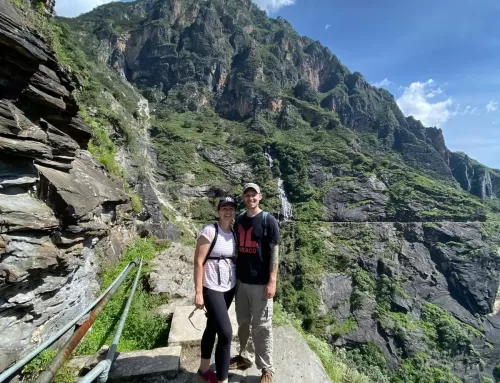
Tiger Leaping Gorge is one of the most impressive canyons we’ve ever seen because of the incredibly fast-rushing water of the Yangtze River. I’ve never seen water flow at such an intense rate. It’s absolutely insane. You can descend stairs to get pretty close to the water, and fair warning, it’s LOUD. But seeing that rushing water up close is totally worth it.
The hiking here is also incredible. We only had half a day, so our driver dropped us off at the top and we hiked along the ridge and down into the gorge. But if you have a few days, you can do the full Tiger Leaping Gorge trek and stay at tea houses and small hotels along the way (this is a bucket-list multi-day hike for serious trekkers).
The views were by far the best we got. The mountains on both sides of the canyon create dramatic, amazing scenery. It felt like hiking through a fairytale landscape.
Book a Tiger Leaping Gorge day tour through GetYourGuide or Klook for a full-day experience with guide and transportation.


Day 8: Travel to Shangri-la
Getting There: You can take a bus or hire a driver from Lijiang to Shangri-la (about 3-4 hours). The drive itself is beautiful as you head higher into the mountains.
Where to Stay: Book a hotel in Shangri-la Old Town through Trip.com. The accommodations here range from budget guesthouses to nice hotels.
Arrive in Shangri-la and spend the afternoon getting oriented. As you drive north, you’ll notice the architecture changing from typical Chinese style to traditional Tibetan plains style. The houses have greenhouse-like glass surrounding them, which actually serves as insulation as the winters here are dangerously cold at this elevation, so the glass keeps the warmth inside.
Speaking of elevation: Shangri-la sits at 10,370 feet (3,160 meters). You will feel it. Oxygen is sold everywhere to help you acclimatize. This higher elevation means that even in summer, it was cold here at night, so bring coats and warm clothing.
The town is small but adorable, with lots of shops selling yak products and yak food. Spend the evening wandering the Old Town and trying local food. You’ve got to try yak sashimi! It’s raw yak thinly sliced and served with soy sauce. It was delicious! And definitely try the butter tea here to stay warm.
Day 9: Shangri-la – Songzanlin Monastery and Hiking
Morning: Songzanlin Monastery
Just a few minutes north of Shangri-la city is Songzanlin Monastery, the largest Tibetan Buddhist monastery in Yunnan. It’s vastly impressive. The walk up the stairs to the monastery is humbling, and the monks who live there are welcoming and kind. This is definitely a highlight and worth spending a few hours exploring.
The monastery complex is huge with multiple temples, prayer halls, and living quarters. The golden roofs and traditional Tibetan architecture against the mountain backdrop are stunning.
Afternoon: Explore Tibetan Culture
Due to the Buddhist culture here, a traditional style of art called thangka is practiced by many local artists. You can even take a class yourself to create a thangka painting to take home. Several shops and studios in Old Town offer these classes.
If you visit in summer, there are many hiking opportunities through the gorgeous terrain. We used a local guide to take us on a hike through the plains, over a few mountains, and through a farmer’s field. It was incredible learning about Tibetan culture and the local people while hiking through stunning landscapes.
Book a Shangri-la monastery and cultural tour through GetYourGuide for a guided experience with transportation.


Day 10-11: Return to Kunming and Travel to Puer
Getting There: Take the bus or train from Shangri-la back to Kunming (this is a long travel day – about 8-10 hours by bus, or you can fly). From Kunming, take the train to Puer (about 4-5 hours).
Where to Stay: Book a hotel in Puer city center through Trip.com.
Day 10: Travel Day
This is mostly a transit day getting from the north back down to southern Yunnan. If you arrive in Puer with time to spare, take a walk around Meizihu Park with its wooden boardwalk along the lake shore, or check out Northern Wetland Park for beautiful flowers and greenery right in the city.
Day 11: Puer – Tea Capital of China
If you’re after authentic Chinese tea, there’s no place like Puer. This city and the surrounding mountains produce some of China’s finest tea. Think of it like the Champagne region of France as there’s a type of Chinese tea called Puer, and authentic Puer tea only comes from this region.
Morning: ChaMa (Tea Horse) Plaza and Ancient City
Visit ChaMa Plaza, which is dedicated to the ancient Tea Horse Road that transported tea from this area around the world. They’ve built a reconstructed ancient city that winds through the mountains with a valley of flowers, walking trails through old buildings and temples, and beautiful scenery.
It’s a great way to spend a few hours seeing both ancient architecture and natural beauty while learning about the historical importance of tea trade.
Afternoon: Tea Market Shopping
The real reason you visit Puer is the tea! We found a huge tea market on the southern road near Culture Center Park. This market had some of the best teas. We still drink tea we bought here to this day.
Stop in different tea shops, sit down, and drink local teas. The shop owners are happy to let you sample multiple varieties. Buy what you like or keep trying until you find the perfect tea for you. No pressure, just good tea and friendly conversation.
This is your chance to bring home authentic Chinese tea that you can’t get anywhere else. The vendors are knowledgeable and patient, and the quality is way higher than anything you’ll find in tourist shops elsewhere.


Day 12-14: Xishuangbanna – Tropical Paradise
Getting There: Take the high-speed train from Puer to Xishuangbanna (only 3 hours thanks to the new train line opened in 2021). Before 2021, this was a 14+ hour bus ride, so the new train is a game-changer. Book through Trip.com.
Where to Stay: Book accommodation through Trip.com. Xishuangbanna has tons of mega resorts with pools if you want that vacation vibe, or stay closer to the city center for easier access to markets and temples.
Xishuangbanna feels like stepping into a completely different country. The Dai people group lives here, and it’s as close to Laos and Myanmar as you can get in China. Think tropical Thailand vacation vibes, that’s Xishuangbanna.
Day 12: Arrive and Explore Night Market
Afternoon: Get settled and explore the resort or city center
The town has become a major tourist destination for Chinese people with five-star resorts everywhere. The vibe is very beachy with people walking around in swimsuits and coverups. Almost every hotel has a pool.
Be prepared for super hot and muggy weather if you visit in summer. It was the hottest place we went in Yunnan, but the pools and tropical atmosphere make it manageable.
Evening: Ganbai Street Night Market
Visit Ganbai Street Night Market, the largest outdoor street market that comes alive at night when temperatures cool down. It’s filled with miles of food vendors, crafts, local products, hair extensions, and temporary tattoos. There are tons of places to sit, multiple live music spots, and it’s right on the river which makes for a really fun evening!
Try the local Dai cuisine, Thai iced coffee (sold by every vendor), and fresh mango everything. The food here has flavors very different from the rest of China.
Day 13: Temples and Manting Park
Morning: Dajinta Temple
Visit Dajinta Temple located right on the edge of Ganbai Street Night Market. The Dai-style temple decorations and paintings are stunning with the pointed spears painted in gold with intricate dragon designs that are nothing like temples in the rest of China.
Afternoon: Manting Park
Manting Park is the former imperial gardens that have opened to the public, and it’s insanely gorgeous. You could spend hours walking the paths, enjoying the flowers, and seeing peacocks and koi fish swimming around. It’s so peaceful and colorful so bring your camera because the photos here are incredible.
Food: Try the traditional Dai meal served on a large platter that everyone eats from the middle. It typically includes fried rice, a whole fish, spicy sauce, cucumbers, pork, chicken, peanuts, boiled eggs, lettuce, and rice noodles. You create your own wraps however you want. It’s an interactive and delicious meal!


Day 14: Xishuangbanna Tropical Botanical Garden
This is a perfect way to end your Yunnan adventure. The Xishuangbanna Tropical Botanical Garden is so large it’s divided into two areas: East and West.
The West area is perfect for enjoying the vast array of tropical plants and flowers. The photos here are absolutely stunning with exotic plants you won’t see anywhere else. This area is more developed and easier to navigate.
The East area is best for hiking through more natural jungle landscapes. If you have time, spend the full day here exploring both sections.
The botanical garden is over an hour outside the city, but there are both buses and taxis that will take you out there. Book a Xishuangbanna Botanical Garden tour through Klook or GetYourGuide if you want transportation and a guide included.
If you don’t want to spend the entire day at the botanical garden, you could just explore the West area to maximize your experience in a half-day visit.
Afternoon: Depart or Extend Your Stay
From Xishuangbanna, you can:
Take the train back to Kunming (3 hours) to fly out internationally
Fly directly from Xishuangbanna to other Chinese cities
Extend your trip and cross into Laos (border is very close)
Book your onward travel through Trip.com.
Practical Tips for Yunnan
Transportation Between Cities: China’s train system is incredible. Book all trains through Trip.com as early as possible (tickets release two weeks in advance). Arrive at train stations 30 minutes before departure, not hours like airports.
Food: Yunnan food is incredibly diverse. Don’t miss:
Mushroom hotpot (hundreds of mushroom varieties)
Crossing the Bridge Noodles (interactive soup with raw ingredients you cook yourself)
Smoked pork dishes (better than American bacon)
Yak sashimi in Shangri-la
Butter tea in the mountains
Dai cuisine in Xishuangbanna
Altitude: Shangri-la is high elevation. Take it easy the first day, drink lots of water, and oxygen is available if you need it.
Weather: Pack layers. You’ll go from hot and humid in Xishuangbanna to cold nights in Shangri-la, all in the same trip.
Language: English is less common in Yunnan than in big cities like Beijing or Shanghai. Have Baidu Translate ready and be patient. The locals are very friendly even with the language barrier.
Final Thoughts
Yunnan completely exceeded our expectations and became one of our absolute favorite places in all of China. The natural beauty is unmatched: from dramatic gorges to serene lakes, from snow-capped mountains to tropical gardens. The cultural diversity from all the different ethnic groups makes every city feel unique. And the food! Oh, the food is incredible.
This 14-day itinerary gives you a comprehensive tour of Yunnan’s highlights, but honestly, you could spend months here and still not see everything. If you have extra time, consider adding:
Yuanyang Rice Terraces (stunning landscapes, especially at sunrise)
Dongchuan Red Land (incredible red soil creating natural art)
More time in any city you fall in love with
Yunnan is more accessible than you might think thanks to China’s excellent train system and the helpful apps like Trip.com, DiDi, and AliPay. Yes, it’s a bit more off the beaten path than Beijing or Shanghai, but that’s exactly what makes it special.
We can’t wait for you to discover this incredible province. Safe travels, and get ready for some of the most stunning landscapes you’ve ever seen!
Have questions about traveling to Yunnan or China? Drop them in the comments below – we’re always happy to help!
Discover more from Penley Perspective
Subscribe to get the latest posts sent to your email.